Grass awns: why this plant can be deadly dangerous for your dog
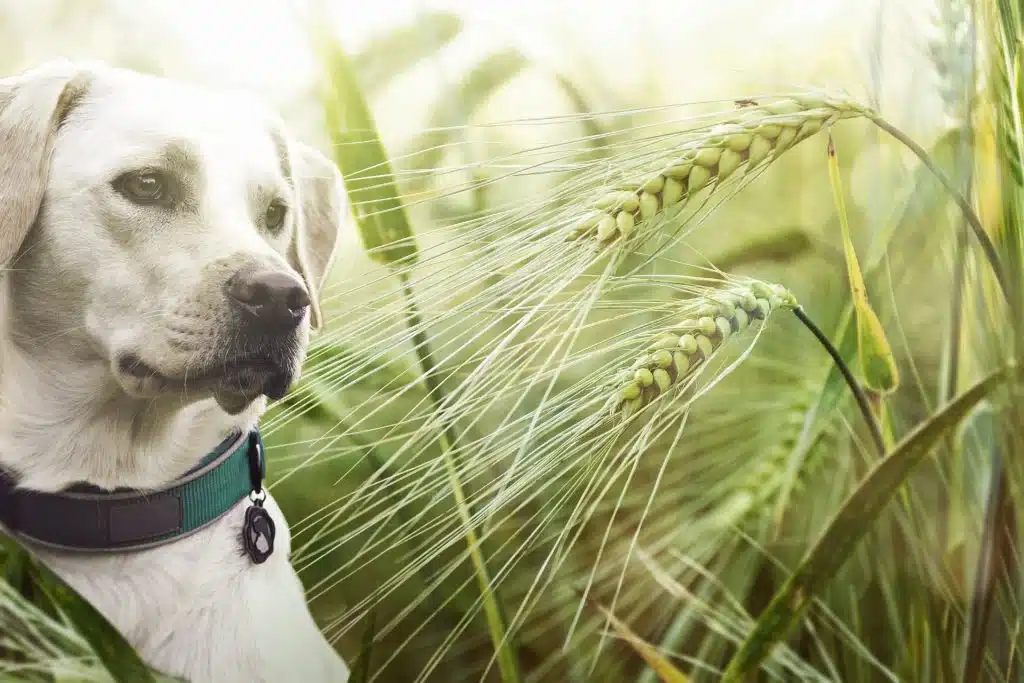
What do you know about grass awns? Probably not enough. As scary as it sounds, grass awns can kill your dog. Because they thrive in summer, it is worth getting informed before you let your dog roam the countryside at this time of year. Whether you call them awns, grass seeds, foxtails, spear grass or something else, they can only mean trouble for your dog.
What exactly do grass awns look like?
This is what grass awns look like:

They are sharp grass seeds, (sometimes) with barbs, produced by certain types of grass. Grass awns burrow into the dog’s skin and cause pain. Grass awns are just one of the many dangers your dog is exposed to when it is outdoors. They can be inhaled, swallowed and can even get under the dog’s skin.
If grass awns are not removed in time, they lead to painful abscesses that have to be drained regularly.
Grass awns are deadly dangerous for your dog
The problem with grass awns is that they are hard to find. If you do spot an awn, remove it as quickly as possible. A pair of tweezers will do the job. The trouble starts when it’s impossible to spot. You know your dog is in pain and you suspect the seed has already worked its way into your dog’s body, but you can’t find it.

Don’t expect X-rays to help: in this case they are only useful for detecting the inflammation. If the seed can’t be removed, the dog will need long-term treatment to heal the pain. If that’s the case, go to your vet as soon as possible. It’s very likely that your vet will also have difficulty locating the awn. The dog will then need to be treated with antibiotics for a long time.
How to tell if your dog is in danger
Depending on where the grass awn gets stuck, the symptoms vary:
- Coat: no infections or abscesses, just matted fur
- Ear canal: the dog shakes its head, scratches or rubs its ears, holds its head at a slight tilt
- Between the eye and eyelid: the dog’s eyes become inflamed, sometimes with discharge or tears
- Nose: the dog sneezes, paws at its nose and has a nasal discharge
- Gums, tongue, mouth: if swallowed, the awn can get stuck at the back of the throat near the tonsils and cause inflammation and swelling
- Lungs and other organs (inhalation or migration): the dog shows signs of serious illness, which can include shortness of breath and episodes of vomiting
Keeping an eye on your dog is the best prevention
You can’t fully protect your dog from grass awns. But there are some precautions you can take to feel safer. Grooming your dog straight after a walk and removing any remaining grass from its coat is a good habit. When you check your dog like this, look at the toes, ears and shoulders.
Trimming the fur between your dog’s toes and on the soles of its feet makes it easier to spot grass awns. Be doubly careful if you know your dog runs through long grass or wild meadows. Prevention starts in your own garden, so check your dog’s favourite spots wherever you can!
Is your dog an escape artist that sometimes wanders around the neighbourhood? If you live in the countryside and want to know where its trips take it, to keep it safe, a Tractive GPS is what your dog needs. With the Tractive GPS Tracker attached to your dog’s collar, you always know where your furry friend is, conveniently on your smartphone, even when you’re not nearby. Prevention is the best cure, as they say. Want to discover more benefits of Tractive GPS? Click here.

Source: Tractive Blog