Tick control for dogs: tips to keep your dog healthy
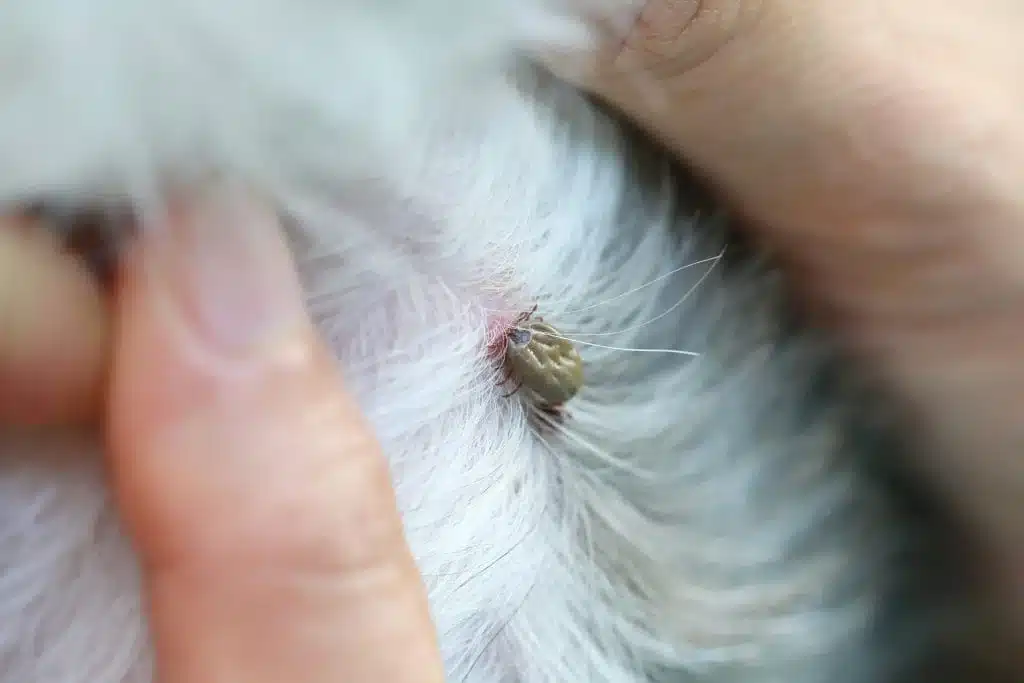
Going for walks in the woods or doing other outdoor activities with your dog is great, but checking for ticks afterwards is essential. These tiny creatures can do more harm than most people think. Warm weather also means ticks become active, which can lead to the transmission of tick-borne diseases. Just like people, dogs can fall victim to fleas and ticks, and tick-borne diseases can be just as harmful to dogs as to humans. What can you do to keep your dog tick-free? Here are a few ideas to consider…
Tick control for dogs
Ticks are most active in spring and summer, between March and October, which means we need to take extra care to prevent the spread of tick-borne diseases, not just for ourselves but for our dogs too. Of course, removing ticks from your dog is no fun. Not only are these bloodsuckers disgusting to look at, filled with your pet’s blood, they are also very hard to get rid of. But if a tick is left too long or isn’t removed completely, it can cause serious illness.
Keeping dogs out of long grass and woodland would of course reduce their exposure to ticks. But it probably isn’t realistic to keep dogs indoors for the whole tick season. Dogs love walks and they love the woods, so they can pick up a hitchhiking tick quite easily. Here are some tips to make sure your dog is protected.
Tick spray
Tick spray kills ticks quickly and offers residual protection. Sprays are useful when you plan to spend time in wooded areas with your dog. Be careful when using the product around your dog’s face and don’t use it on or near other animals in the house. Tick sprays often contain permethrin or pyrethrin. Permethrin is for dogs only: it is toxic to cats. You don’t need to soak your dog with the spray, but do spray all parts of its body. Follow your vet’s and the manufacturer’s instructions on how often to apply it.
Tick shampoo
Washing your dog with a shampoo that contains medicinal ingredients will generally kill ticks on contact. This can be an inexpensive way to protect your dog during peak season. You’ll need to repeat the process more often, about every two weeks, because the active ingredients don’t last as long. To use a flea and tick shampoo properly, make sure it is worked into the whole body and leave it on for at least 10 minutes before rinsing. Again, remember to protect your dog’s face, especially the eyes and ears.
Powders
Powders are generally easy to apply but can be messy. If your dog has asthma, powders may not be the best choice because the powder can be inhaled.
Tick collars
Collars that repel ticks are easy to use, although they are mainly useful for protecting the neck and head. A tick collar needs to be in contact with your dog’s skin to transfer the active substances to the coat and skin. Ask your vet before putting a tick collar on your dog. If you choose this option, make sure there is just enough room to fit two fingers under the collar. Cut off any excess length so your dog can’t chew on it. Check the packaging for how long it stays effective, as many collars lose their effectiveness when they get wet. Watch out for irritation under the collar. If this happens, you may need to use a different product.
Checking your dog for ticks
After a day outdoors in areas where ticks lurk, check your dog carefully. Look between the toes, in the ears, between the legs and around the neck. If you find a tick attached to your dog, remove it immediately and carefully, making sure you remove the whole tick. Use a tick remover or fine tweezers, grip the tick as close to the skin as possible and pull it out with a steady movement.
Keep an eye out
Watch your pet closely over time and look out for any changes in behaviour. If your pet isn’t acting normally, take it to your vet as soon as possible.
Finally…
Talk to your vet about vaccinating your pet against Lyme disease and about the best way to keep fleas and ticks off your beloved pet.

Source: Tractive Blog